- info@maldivestourism.org
- +919810066496
- +9198110 66496
The best places to visit in Maldives fall into three groups: The capital Male for culture, resort atolls like Baa and South Ari for marine life, and budget local islands such as Maafushi and Dhigurah. Pick by trip type first, then match the season. Couples lean toward Baa, families toward Maafushi, and snorkelers toward Hanifaru Bay.
A note on prices: This guide lists costs in US dollars with an approximate rupee figure, converted at about INR 95 to USD 1 as of July 2026. Rates move, so treat the INR amounts as a guide and confirm before you pay.
The top places to visit in Maldives are Male, Maafushi, Baa Atoll and its Hanifaru Bay, South Ari Atoll and Dhigurah, Vaadhoo, Fulhadhoo, Addu Atoll, Thulusdhoo, Hulhumale and Sun Island. Each suits a different kind of trip.
The Maldives is not one place. It is 26 atolls and more than 1,000 islands scattered across the Indian Ocean, and the right spot depends on what you came for. Some people want a room on stilts over a warm lagoon. Others want a fifty dollar guesthouse and a ferry ticket. Both are here.
Here is the short list I give friends before they book, with the reason each one earns its spot.
For couples and honeymooners, North Male, South Male and Baa Atoll hold the best overwater-villa resorts. Choose a resort with its own house reef so you can snorkel straight off your deck.
If this is a honeymoon, the transfer time matters more than people expect. A resort you reach by a 25 minute speedboat means you are in the lagoon by lunch. A far seaplane resort can eat half a day at each end, and seaplanes only fly in daylight.
Baros Maldives in North Male Atoll is a smart pick for a short trip. It sits about 25 minutes by speedboat from Velana International Airport, the villas stand over the water on stilts, and the house reef starts a few steps down the deck ladder. You can be snorkeling with reef sharks before you have unpacked.
For a quieter, greener setting, look at Milaidhoo or Soneva Fushi in Baa Atoll. Both put you near the manta cleaning stations and Hanifaru Bay. In South Male Atoll, Cocoa Island by COMO gives you overwater suites and a short boat ride back to the airport.
A honeymoon does not have to cost a fortune, though. Plenty of couples base on Maafushi, book a sunset sandbank trip for two, and spend a fraction of the resort rate. As of mid-2026, overwater villas at the well-known resorts usually start somewhere around USD 700 to 1,200 (about INR 67,000 to 1,15,000) a night in high season, and climb steeply from there. Rates swing hard with the calendar, so price a few dates before you commit.
Families do best on Maafushi and larger resort islands such as Sun Island, where shallow lagoons, short transfers and easy water sports keep the days simple with kids.
With children, pick islands with a shallow, calm lagoon and a short transfer. Maafushi works well. The bikini beach section shelves gently, so small kids can paddle in ankle-deep water while reef fish dart around their feet. Guesthouses here rent family rooms for roughly USD 50 to 150 (about INR 4,800 to 14,300) a night as of 2026, many with breakfast included.
Sun Island Resort in South Ari suits families who want one big island to roam, with pools, wide beaches and a walkable layout. It sits about 107 km from the airport, reached by seaplane or a longer speedboat, so plan the travel around nap times.
Hulhumale is the easy option for a first or last night with kids. It has a long public beach, plenty of cafes, and buses number 101, 401 and 402 that reach it cheaply. You are close to the airport, which takes the stress out of an early flight home.
Budget travelers should base on Maafushi, Dhigurah, Fulidhoo, Thulusdhoo or Ukulhas, where guesthouse rooms run about USD 50 to 150 (roughly INR 4,800 to 14,300) a night and public ferries cost only a few dollars.
Local islands changed Maldives travel. You no longer need a resort budget to wake up on a white beach. Maafushi is the obvious first base, 27 km from Male, with the widest choice of guesthouses, cafes and trip operators. A shared speedboat runs USD 20 to 40 (about INR 1,900 to 3,800) and takes 30 to 45 minutes. The public MTCC ferry is far cheaper at about MVR 22, roughly USD 1.50 or INR 145, but it takes around 90 minutes and does not run on Fridays. Add the short airport ferry to Male, about MVR 15 or INR 95, if you go the public route. Prices checked mid-2026, and operator fares do change, so confirm before you travel.
For whale sharks on a budget, Dhigurah in South Ari is the one. It is a long, thin island with a guesthouse scene that rivals Maafushi and a beach that seems to go on forever. Fulidhoo, over in Vaavu Atoll, is tiny enough to walk end to end in a few minutes. Come evening, nurse sharks and stingrays cruise the shallows by the jetty, close enough to watch from the sand. Thulusdhoo pulls in surfers for the Cokes and Chickens breaks, and Ukulhas is known for how clean and well run it is.
One thing competitors skip: Local islands are Muslim communities, so the rules differ from resorts. Wear a t-shirt and shorts in the village, and save swimwear for the marked bikini beach. Alcohol is not sold on local islands. If you want a drink, book a resort day pass or a liveaboard safari boat that carries its own bar. Knowing this before you land saves an awkward first evening.
The most beautiful natural spots are Hanifaru Bay for manta rays, Vaadhoo for the glowing Sea of Stars, the South Ari zone for whale sharks, and reefs like Banana Reef and HP Reef.
This small bay, about 120 km from Male, fills with plankton on the incoming tide, and the mantas arrive to feed by the dozen. Manta season runs May to November, with the best odds from June to October, and sightings peak around the new and full moon when the currents run strongest. You need a permit that costs USD 20 (about INR 1,900) per person per day, your time in the water is capped at about 45 minutes, and only around 80 people are allowed in per day. It is snorkeling only, no scuba, to protect the animals. A guided excursion from nearby Dharavandhoo runs about USD 60 (about INR 5,700) all in, permit included, as of 2026. More details below.
After dark, the shoreline here can light up electric blue, as bioluminescent plankton flash when the waves stir them. The glow shows best on calm, moonless nights, most often from roughly June to October, though some travelers see it as late as February. Go on a new-moon night, get away from any beach lights, and give your eyes time to adjust. Be honest with yourself, though: The Sea of Stars is never guaranteed, even if you sleep on Vaadhoo. More details below.
The South Ari Marine Protected Area holds whale sharks all year, which is rare in the Maldives. Operators report finding them on roughly 70 to 90 percent of trips across the seasons. A guesthouse day trip from Dhigurah or Maafushi costs about USD 80 to 150 (about INR 7,600 to 14,300) per person including the boat, snorkel gear and lunch. The dry months give clearer water at the surface, while the wetter months bring plankton that keeps the sharks feeding.
These two protected reefs are among the oldest known spots for snorkeling and scuba in the country. On a clear day the water opens up to about 30 metres of visibility, best from December to April. Expect green turtles, reef sharks, eagle rays, moray eels and clouds of tropical fish over the coral. More details below.
Male’s top attractions are the Grand Friday Mosque, the Old Friday Mosque, the National Museum in Sultan Park, the Majeedhee Magu market street, and the Artificial Beach. Half a day is enough.
Most people rush through Male on the way to a resort, and that is a small waste. The capital packs a lot onto one crowded island, and a half day here adds real texture to the trip. These are the five spots I would not skip.
While you wander, try short eats from a local cafe. Mas huni, a mix of shredded smoked tuna, coconut and chili scooped up with flaky roshi bread, is the classic Maldivian breakfast, and it costs a few dollars. More details below.
You fly into Velana International Airport near Male, then transfer by speedboat, public ferry or seaplane. Resorts arrange transfers on arrival; local islands use shared speedboats or the public ferry network.
Almost everyone lands at Velana International Airport, on its own island next to Male. From there your onward transfer depends on where you are headed.
To hop between local islands, string together public ferries for a few dollars a leg, though the timetables demand patience and rarely run on Fridays. If you want to cover several atolls without the wait, a liveaboard safari boat moves you between snorkeling and surf spots and sleeps you on board. Line up your flight time with the speedboat schedule, since missing the last afternoon boat can strand you in Male overnight.
The best time to visit most places in Maldives is the dry season, roughly November to April, with sunny skies and calm, clear seas. May to October is wetter but better for mantas and whale sharks.
The dry northeast monsoon, about November to April, brings the postcard weather: Long sunny days, calm water and visibility that can pass 30 metres on the reefs. It is also peak season, so December and January carry the highest prices and the busiest beaches.
The wetter southwest monsoon, May to October, gets a bad rap it does not fully deserve. Rain tends to come in short, heavy bursts rather than all-day gloom, and prices drop while crowds thin. More to the point, this is when plankton blooms pull the mantas into Hanifaru Bay and light up the Sea of Stars on Vaadhoo. If marine life is your reason to come, the so-called off season is actually prime time for Baa Atoll and Raa Atoll.
Surfers get their own window, with the best swells rolling in from around March to October across the Male atolls.
Now that all the major questions are answered, here is a detailed description of top Maldives attractions:
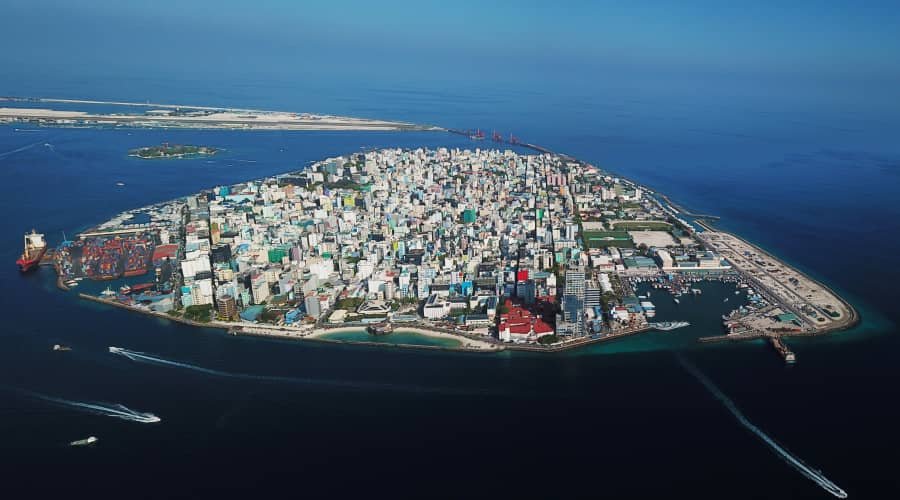 The bustling capital of Male is the modern gateway to the Maldives. This city island is packed with lively markets, quirky cafes, centuries-old mosques, and intriguing museums that provide a dose of culture with the best places to visit in Maldives. Visit the ornate Grand Friday Mosque, built in 1656 with intricate coral stone carvings, or the Old Friday Mosque, one of the oldest mosques in this predominantly Muslim country dating back to the 15th century.
The National Museum has a fine collection of historical artifacts spanning over 2,000 years, while the small but modern Maldives National Art Gallery hosts rotating exhibitions by local artists.
When planning places to visit Maldives, spare half a day to wander Male’s lively streets and markets. Try local street food like shaviyani roshi (fine wheat noodles mixed with chili, onions, and grated coconut). The best time to visit is in the dry season from December to April when rains are rare.
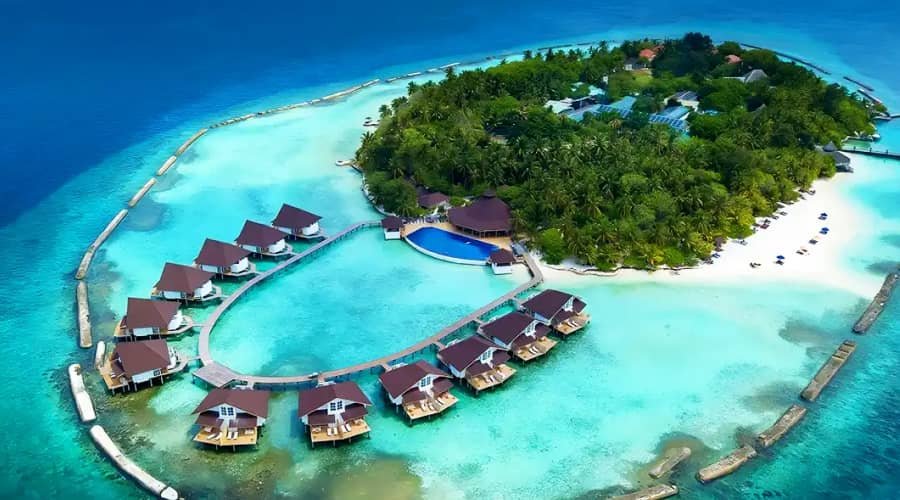 Off North Male Atoll, Banana Reef lives up to its playful name with its bright yellow coral formations and curved banana-like shape. Protected as a marine sanctuary, this easily accessible reef is a top spot for diving and snorkeling in Maldives.
Novices can snorkel straight off the white sandy beaches encircling Banana Reef to glimpse green sea turtles, reef sharks, and thousands of brilliant tropical fish species all living within the reef. Certified divers shouldn’t miss exploring outer reef walls plunging thousands of feet into the deep blue, where moray eels, Napoleon wrasses, stingrays, and reef squid hide within overhangs dotted with vibrant purple corals.
Currents can pick up so it’s best to visit Banana Reef in March and April at the peak of the dry season when visibility stretches over 30 meters. A great way to end a snorkel or dive here is relaxing on the small strip of beach, but note there are no resorts or amenities on Banana Reef itself.
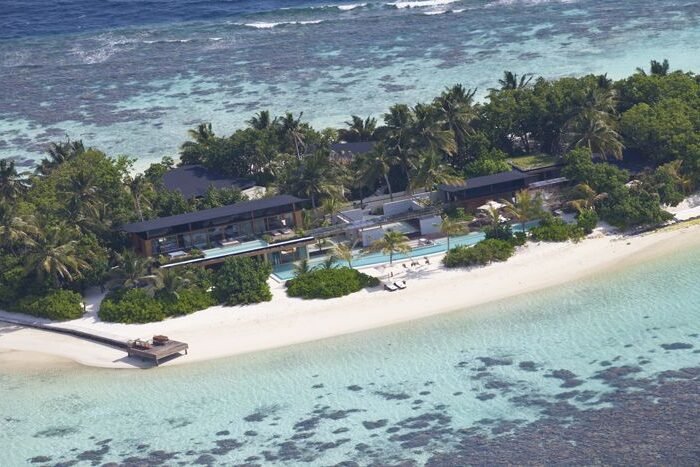
 For honeymooners and couples seeking romance, it’s tough to beat the water villas at Baros Maldives in North Male Atoll. This small and stylish boutique all-inclusive resort has sand-floored luxury villas on stilts over waters glowing brilliant turquoise, complete with overwater hammocks, glass-bottom floors to spy sea life, outdoor rain showers, private infinity pools, and catamaran nets. Baros prides itself on exceptional dining and world-class service.
Sip sunset cocktails on daybeds at the Lighthouse Rooftop Sunset Bar overlooking the Indian Ocean. Feast on Japanese, Mediterranean, and freshly caught Maldivian seafood, with many ingredients sourced straight from Baros’ hydroponic gardens. When planning top places to visit in Maldives, schedule a pampering session at the overwater Cayenne Spa with ocean views or learn pole and line fishing on a traditional dhoni. Thanks to a house reef teeming with green turtles, eagle rays and reef sharks, Baros offers fantastic snorkeling and diving opportunities.
Visit in March and April, when 10 hours of daily sunshine ensures snorkel sightings of sharks and mantas feeding on rich plankton.
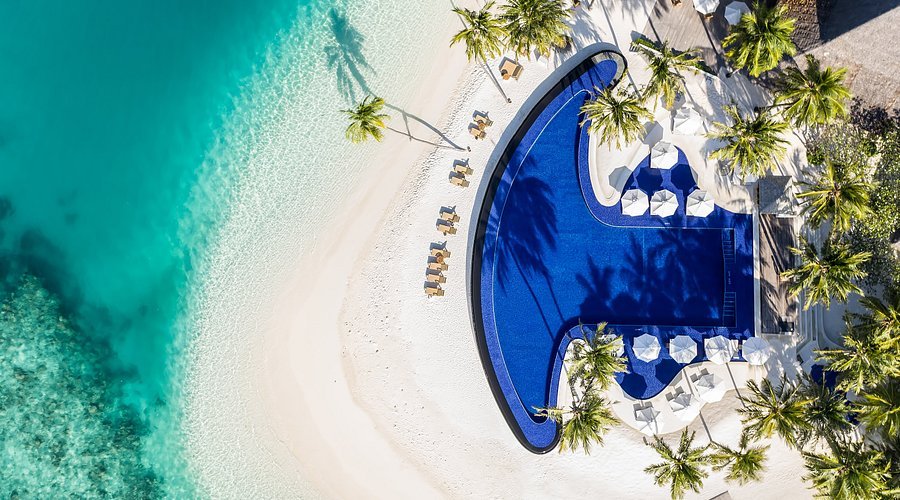 Spread between two islands connected by a 500-meter bridge crossing turquoise shallows, Conrad Maldives Rangali Island lets you enjoy both typical water villas and Maldivian cultural experiences. Located in secluded Alifu Dhaalu Atoll, this premium resort’s unique selling point is its underwater restaurant and wine cellar called Ithaa. These destinations must be in your places to visit in Maldives.
Down spiral stairs, this curved all-glass dining room sits 5 meters below the surface, hosted within an aquatic greenhouse with 180-degree views over coral gardens blooming with rainbow parrotfish, angelfish, and turtles. Back on dry land, relax at overwater spa villas, sample South American wines at the only Maldivian Vinotheque, swim beside whale sharks and mantas at neighboring dive sites or enjoy a candlelit dinner on the beach. Conrad hosts traditional Bodu Beru cultural performances with summoning drums and lively dancing.
Visit Conrad Maldives in February and March, when beachside temperatures hover around 30°C but seas remain bathwater-warm at 29°C with excellent visibility, making it one of the best places to visit Maldives for snorkeling with mantas and whale sharks.
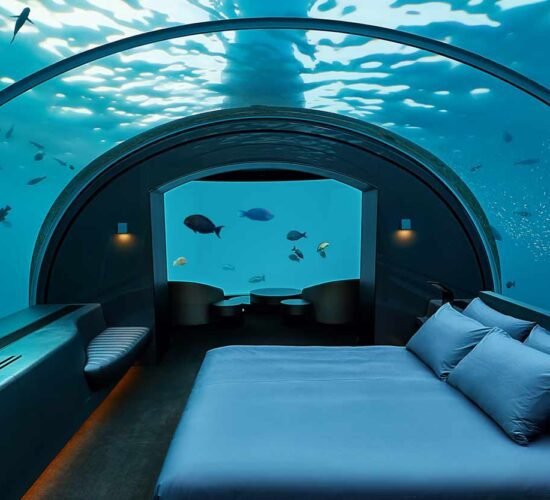
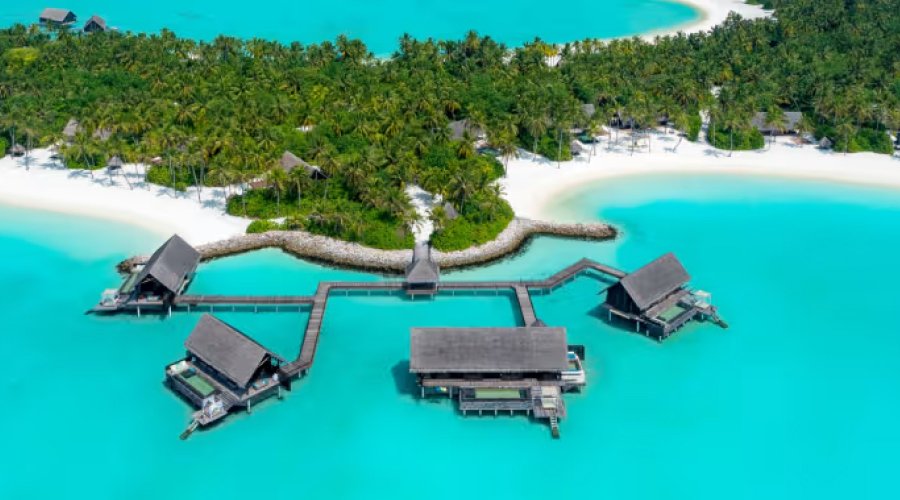 For an utterly unique twist on top places to visit in Maldives, stay in an underwater suite with Rah Seabed Maldives. Located in picturesque Raa Atoll near excellent snorkeling reefs, Rah offers the world’s first underwater glass villas. Down spiraling stairs, three seabed suites sit five meters below the Indian Ocean surface, encapsulated within a curved acrylic glass dome. Peer up at snorkelers and kayakers paddling above as Oriental Sweetlips, striped surgeonfish, and hawksbill turtles swim peacefully outside the window.
By day, explore house reefs or book a massage in the Earth Spa nestled privately within tropical foliage. As the sun sets, return to your underwater room where ceiling mirrors reflect ripples of turquoise water and schools of fusiliers swim past glow-in-the-dark bean bags. Dine on fresh catches from local fishermen back on shore or request an underwater dinner in your suite featuring fusion plates like chili-glazed tuna.
There’s no better time to book this underwater bucket list experience than during whale shark season from December to February when sightings happen daily.
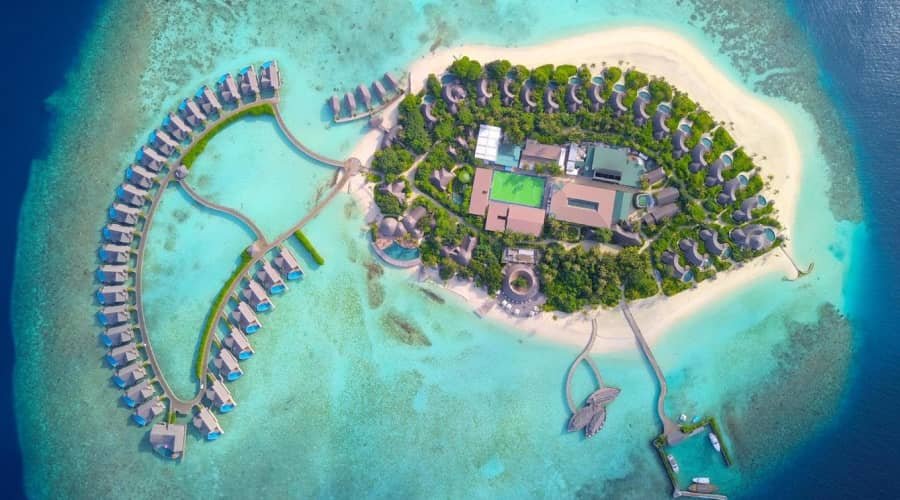 This exclusive boutique resort sets the gold standard for luxury in Maldives with its tranquil overwater spa, stellar dining options focusing on fresh seafood, and 50 romantic pool villas made from natural materials. Set in sparkling Baa Atoll, a UNESCO Biosphere famous for manta cleaning stations and Hanifaru Bay’s migrating whale sharks, the resort offers exceptional snorkeling and diving along house reefs and nearby Protected Marine Areas. Make sure to add it to your places to visit in Maldives.
But with your own freshwater infinity pool, why leave your spacious water villa? Swim up to the thatched pool bar as the sun sinks below the horizon for inventive cocktails or request an in-villa chef-prepared barbecue feast. Milaidhoo Island’s piece de resistance is its Cocoon overwater spa, seemingly floating weightlessly above mirror-flat lagoons. Indulge in coconut oil massages inside thatched treatment cocoons surrounded by turquoise views.
Visit Milaidhoo Island in March and April for bathwater seas, 10 hours of daily sunshine, blooming corals, chances to spot feeding mantas gliding gracefully at nearby cleaning stations, and phenomenal visibility at famous dive sites like British Loyalty Wreck.
 If seeking environmentally friendly places to visit in Maldives, add Soneva Fushi to your shortlist. This pioneering eco-resort lies on Kunfunadhoo Island in Baa Atoll and offers nature walks, stargazing with resident astronomers, turtle nesting, glass art studios, and an educational Eco Centro.
All water villas and jungle hideaways are crafted using renewable plantation wood, natural fabrics, and traditional palm weaves, and have solar panels that power air conditioning, desalination, and glass-making. Meals feature organic produce grown at on-site gardens along with fresh seafood and therefore, it is a must have thing in the places to visit in Maldives.
Instead of cars, guests pedal bikes along sandy paths shaded by palms between nine dining venues, five beaches, two pools, an open-air cinema, and Six Senses Spa. When planning top attractions in the Maldives, Soneva Fushi’s observatory is a highlight for peering through high-powered telescopes into deep space.
Visit during March’s spring tides to watch baby green and hawksbill turtles hatch under the moonlight and make their maiden swim. Thanks to stringent eco-policies plus proximity to Baa Atoll’s feeding mantas and Hanifaru whale sharks, Soneva Fushi appeals to nature lovers who snorkel or dive.
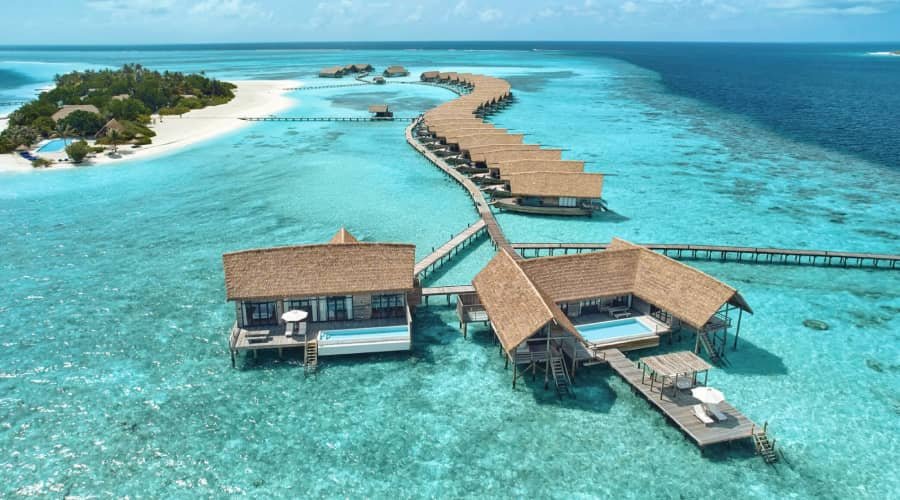 This tasteful private island hideaway occupies three hectares at South Male Atoll’s Cocoa Island. Choose between elegant overwater suites with catamaran nets and private sundecks or lofty Dhoni Suites built from traditional dhoni boats combining lush interiors with vast lagoon views. This COMO resort punches above its weight class with two upscale restaurants led by celebrity chef George Cooper.
Delectable Mediterranean fare featuring fresh-caught Maldivian lobster is served at Ufaa restaurant, while all-day dining at Faru uses organic produce and meat from the island’s hydroponic garden. Of all the luxury places to visit in Maldives, COMO Cocoa Island boasts exceptional service; the chef hosts private picnics on the beach while the Lifestyle Manager arranges personalized itineraries from authentic Maldivian boduberu dance lessons to guided snorkeling safaris over some of Male Atoll’s most pristine house reefs. Thanks to a dedicated marine biologist and on-site dive center, you may spot green turtles and reef sharks while paddling across the limpid blue lagoon.
Visit during March’s manta ray season or book a luxury surf-and-stay package to ride breaks at the famous surfing waves off nearby Tiger’s Eye and Pasta Point Reef.
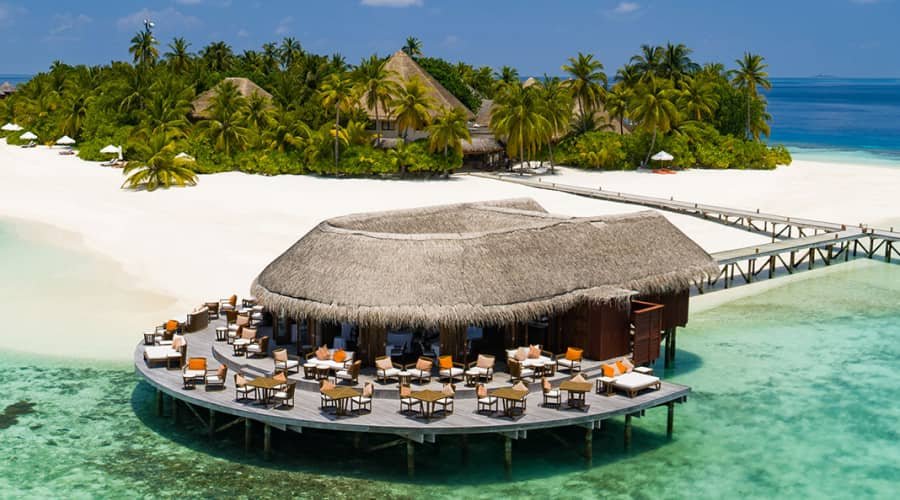 Affordable without sacrificing quality, Mirihi punches above its weight as one of Maldives’ top small island resorts. Just 88 villas dot this oval-shaped tropical island embellished with rich vegetation, fine white sands, and a turquoise jewel-toned house reef where snorkelers spot turtles and rays daily.
While all 34 overwater villas have direct lagoon access and four-poster beds, beachfront villas offer more space for families, with some featuring private plunge pools. Mirihi Island Resort appeals especially to adventurous honeymooners, with regular stingray-feeding sessions in the shallows and guided snorkeling to observe sharks and eagle rays being hand-fed at Muraka house reef. Swim up to the poolside Sand Bar to sip sundowners during spectacular sunsets; dine beachside on fresh grilled seafood, pasta, and pizzas; and book catamaran sailing trips to uninhabited desert islands for beach barbecues and snorkeling explorations.
As one of Maldives’ smallest luxury resorts with attentive staff delivering tailored service, Mirihi makes the perfect tranquil escape. February through April guarantees bathwater seas at 29 ̊C, over 10 hours of sunshine, and superb visibility on vibrant house reefs.
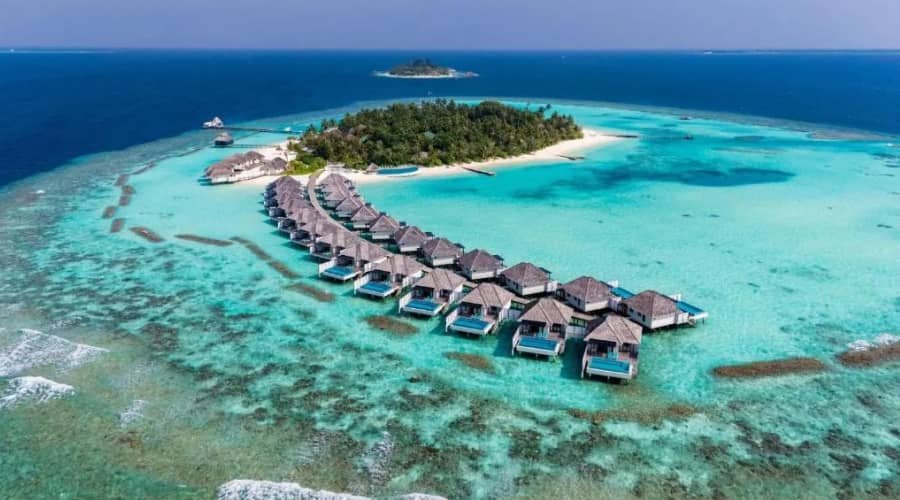 This sleepy palm-fringed island offers Maldives immersion off the beaten track with just 106 rooms at two resorts: the contemporary Dhigurah Maldives and the all-inclusive Chaaya Island Dhonveli affording access to facilities on both of these best places to visit in Maldives. Though Dhigurah lacks its own house reef, picture-perfect sandy beaches fringe the island with hammocks dangling by thatched umbrellas over turquoise shallows; paddleboards and kayaks invite stand-up paddle adventures across Vaadhoo Kandu channel’s flat waters to glimpse manta rays and whale sharks.
Meander dirt trails across the lush tropical island interior passing thickets of glossy green shrubs then cool off in one of Dhigurah’s two freshwater swimming pools. With frequently shared dhoni boat transfers from Dhigurah’s palm-shaded jetty to prime regional snorkeling reefs like Banana Reef, Alimatha House Reef, and Dhigu Thila, you still appreciate Maldives’ spectacular marine life minus the high-end resort costs.
Enjoy beachfront seafood barbecue dinners and sample flavored rums at Dhigurah’s relaxed Beach Cabana swim-up bar.
March through May promises glassy waters with good visibility for seasoned snorkelers and over 10 hours of sunshine – perfect for this no-frills, beach-centric Maldivian escape.
 Malé, the bustling capital of Maldives is home to a beautiful man-made marvel. It is lined with swaying palm trees, a long stretch of soft white sand, and has turquoise waters washing its shores. The Artificial beach was created in the 1980 using sand and corals from other nearby beaches. It sits on the eastern coast of Malé which makes it a beautiful sunrise point.
There are designated spots with shallow waters which makes it a perfect swimming spot even for beginners. The beach is a popular site for both locals and tourists. Here you can relax, sunbathe, go for a walk or simply sit back and enjoy a refreshing coconut drink with the panoramic views of the Indian ocean right in front of you.
Artificial beach is one of those Maldives attractions that is easily accessible to tourists. You can take the bus no 101, 401, and 402 from Male to get to the beach. After spending time on the beach, you may explore nearby restaurants or go shopping.
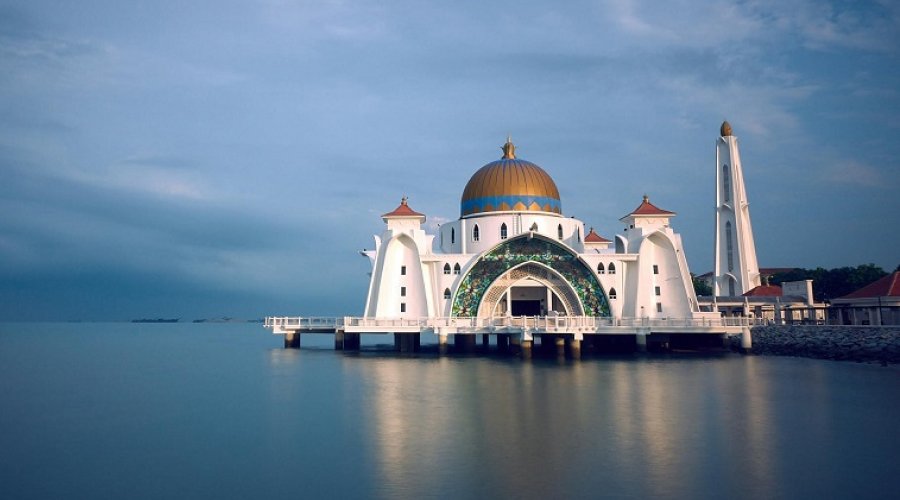 Located in Jumhooree Maidan, Grand Friday Mosque is among the famous places to explore in Maldives and is often included in Malé city tour. Being the largest mosque in the Maldives, this attraction is a point of interest for many visitors. It was named after a significant figure named Sultan Muhammad Thakurufaanu Al Auzam of the Maldives
The mosque features a shining golden dome with a stunning white exterior. One can easily spend 30 to 40 minutes exploring this mosque. The interior walls are decorated with intricate wooden carving, beautiful calligraphy in Arabic language. The mosque is open from 9 am to 5 pm for non muslims. Please make sure to dress modestly while visiting the mosque.
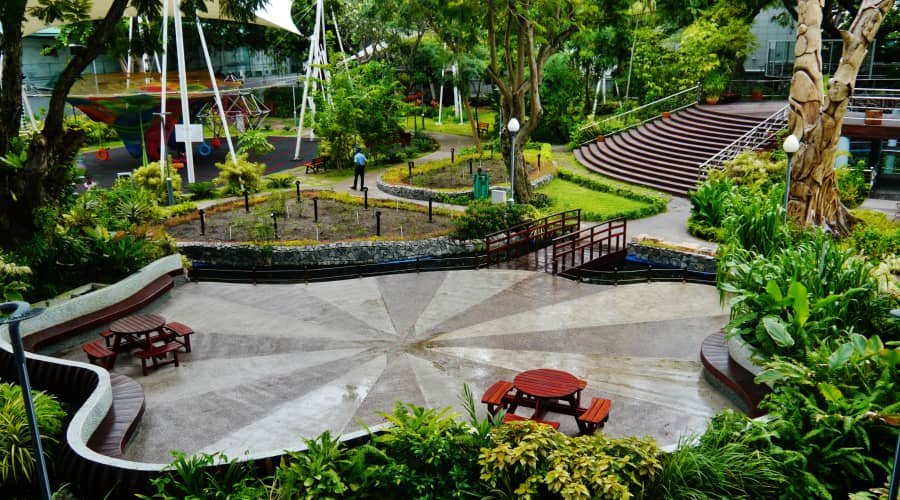 If you’re wondering which places to visit in Maldives with family, Sultan Park is definitely a place to consider. Amidst the rush and commotion of Malé, find peace and moments of tranquillity in a beautifully landscaped Sultan park. The park is adorned with flower beds, a fountain, an artificial brook, and offers a comforting and calming atmosphere to relax. It’s a great tourist spot in Maldives for families to enjoy a picnic. And just outside the park, you will find a restaurant that serves delicious meals and coffee.
Time Required: 30 to 40 minutes.
Entry Fee: $5 for foreigners and free for locals.
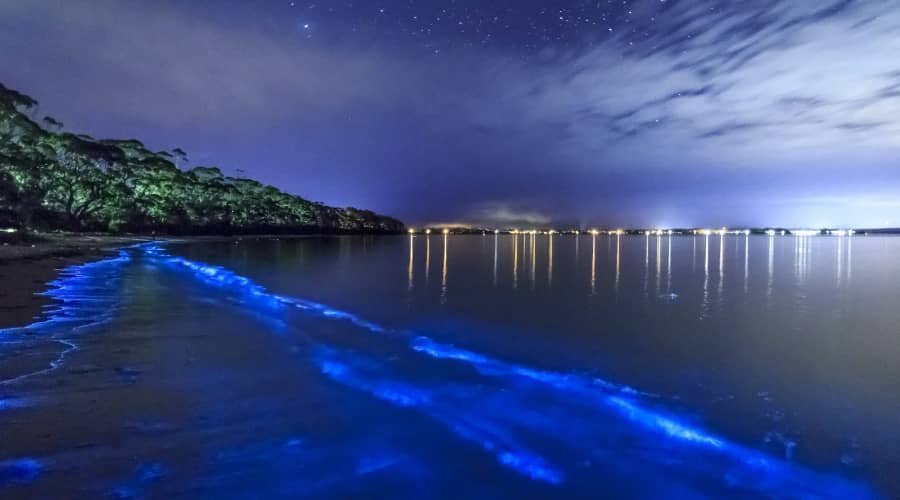 There are many amazing Maldives tourist places that you must explore on your holiday and Vadhoo Island is one of them. The island is famous for its Bioluminescent Beach also called “Sea of Stars”. Watching this natural phenomenon on a dark night is going to be one of the best moments of your Maldives trip. The presence of phytoplanktons on its shores called Dinoflagellates are responsible for the glowing beach wonder. They emit blue light as a defense mechanism (when perturbed by waves or a touch) which creates stars on the surface of the ocean.
Apart from the glowing beach, Vadhoo island is amongst the best places to go in the Maldives for tourism. It’s an ideal place for snorkelling in natural reefs and lagoons, sandbank excursions, and island hopping trips.
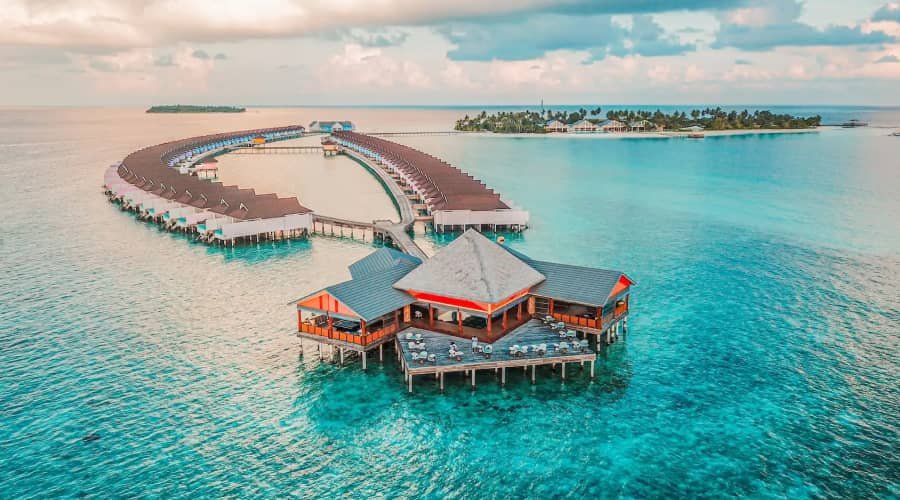 Located in Kaafu Atoll, Maafushi Island is amongst the most popular Maldives places to visit, especially for budget travellers. You will find the most affordable and pleasant accommodations in Maafushi Island for your Maldives holidays. Since tourism is the driving factor for Maafushi island, good tourist infrastructure with shopping stalls, cafes, restaurants and souvenirs stores are punctuated throughout the island.
Maafushi Island is well-connected to Malé and is easily accessible by a ferry. For adventurous souls, Maafushi Island has PADI certified dive centres where you can try different types of diving. Snorekelling, surfing, swimming and other thrilling water sports will also keep the adventurers thoroughly hooked. Spend your day dining, shopping and relaxing on the beaches of Maafushi Island.
 Perched in Baa Atoll, Fulhadoo Island is amongst the most beautiful Maldives tourist attractions. The island is dotted with many pristine beaches along with the tourists’ favourite Bikini beach. Take a therapeutic walk on the soft white sand beaches and watch your footprints appear on the sand as gentle ocean breeze washes over you.
The island has only a handful of guest houses that ensures a lovely stay. If you seek a premium experience or are on a honeymoon, you may check out boutique hotel situated near the harbour
Besides, one can also find eateries like Fulhadhoo Blue Cafe, Dune Cafe and Village Grill. The activities are mostly centred around water sports. One can try canoeing, banana boat riding, and wakeboarding.
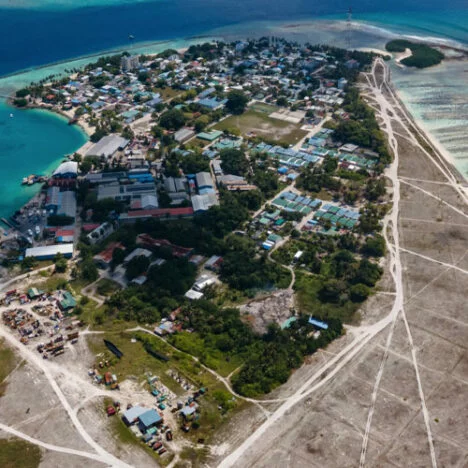
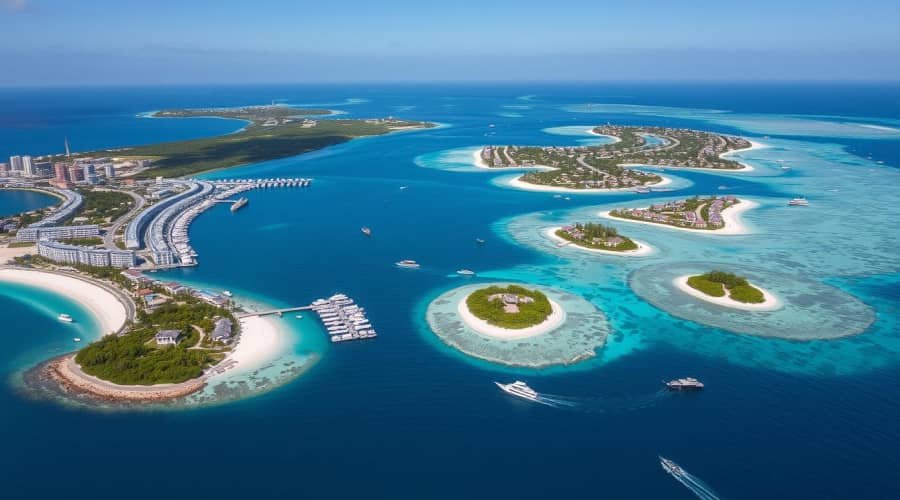 Hulhumalé Island is a reclaimed island created by pumping sand from the sea floor to meet the growing housing requirement for the locals. This island is among the top places to go in the Maldives for finding new experiences and enjoying a relaxed holiday. Regardless of the season or occasion, Hulhumalé is always bubbling with something cool and fun for the tourists to experience.
For foodies, this island has it all. From beach side restaurants to world-class dining restaurants, each place introduces you to lip smacking dishes. Places like the Manhattan Fish Market, Papa Sam’s, The Red Snapper & Coffee Bean bring you the best dishes. Take your pick and satiate your hunger pangs with an explosion of flavours in your mouth. Water sports like diving, jet skiing, snorkeling and beach activities will keep you hooked through the day.
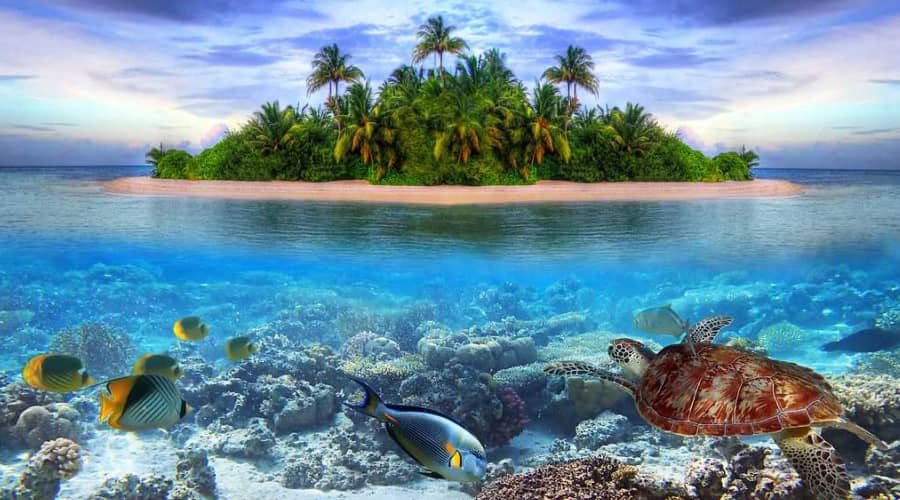 A protected area in North Malé Atoll, HP Reef is the prettiest spot in Maldives for tourists interested in marine life and snorkelling. On a clear day, the HP reef offers an excellent visibility of 30 metres. It is also known by the name of Rainbow reef due to the presence of colourful soft corals, sea fans, gorgonians, aquatic plants and boulders. A dive session can introduce you to a breathtaking world that you have never seen before.
The strong ocean currents bring in food for different schools of fish which becomes a site to behold for divers. While exploring HP Reef, you can spot barracudas, dog-toothed tuna, grey reef sharks, turtles, eagle rays and many tropical reef fish. The best time to visit HP Reef is from December to April.
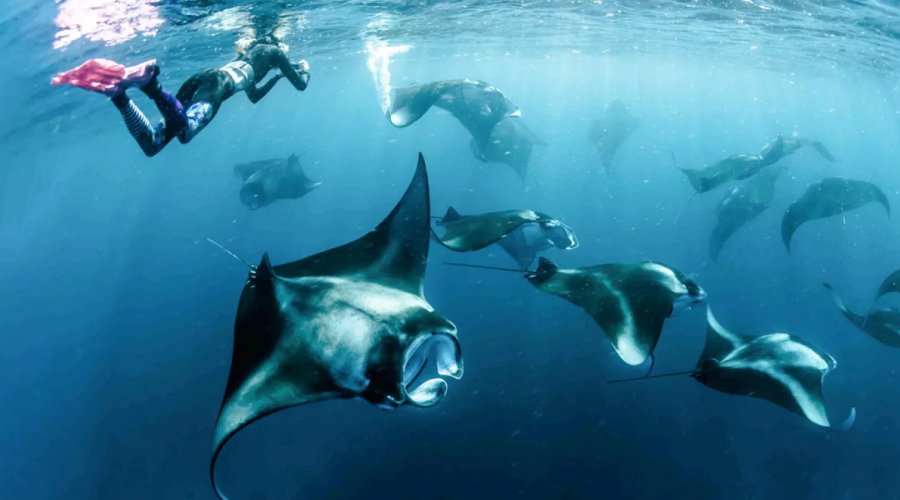 For snorkelers and marine life enthusiasts, Hanifaru Bay is among the most popular Maldives places to visit. Located on the eastern side of Baa Atoll, Hanifaru Bay is approximately 120 kms from Malé city. What makes Hanifaru Bay so interesting is that from mid-May till December, the reef attracts thousands of planktons which then invites many manta rays to feed on them.
With that many manta rays getting together, Hanifaru Bay was declared a Marine Protected Area in 2009 and then incorporated into the UNESCO World Biosphere Reserve in 2011. For snorkelling, you have to purchase a token of $20 that allows your 45 minutes time of group snorkeling. You are accompanied by a certified guide and have to follow strict guidelines for safety and protection of yourself and the marine creatures.
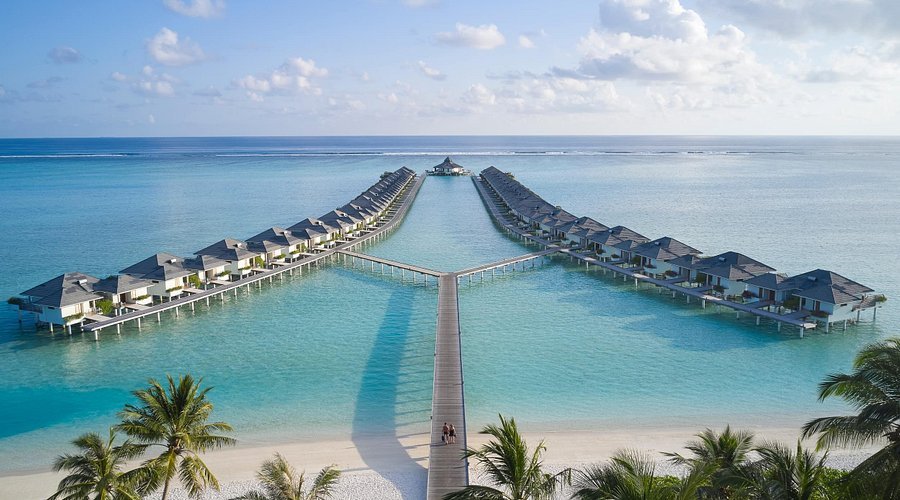 Located in South Ari Atoll, Nalaguraidhoo popularly known as the Sun Island is among the top Maldives tourist places to visit. The island is adorned with lush vegetation, pristine white beaches and is surrounded by aquamarine waters. The island is blessed with a thriving marine life. Here you can spot tropical reef fish, whale sharks, and even turtles.
Sun Island has beautiful beachfront bungalows and overwater villas making it an excellent vacation spot in the Maldives for honeymooners and families. One can also enjoy an array of water sports activities including snorkeling, diving, banana boating, canoeing and freediving. If you seek a relaxing holiday then beaches of Sun Island are a perfect place to lounge and soak up in the sun.
Distance from Malé Airport: 107 km (approximately)
How to Reach: By Seaplane or Ferry
Where to Stay: Sun Island Resort or Holiday Island Resort
Where to Eat: Maaniya Restaurant or Grill Terrace
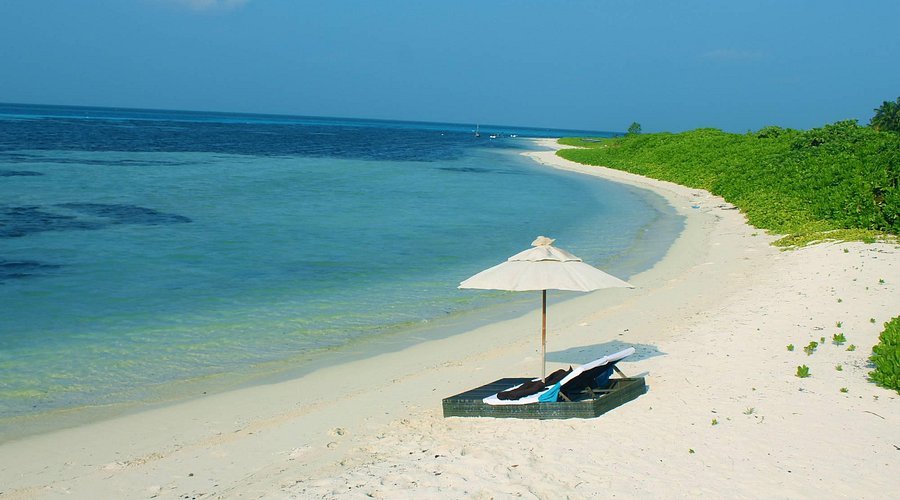 Located in Maldives’ Alif Dhaal Atoll, Maamigilli is a prime destination for spotting whale sharks. Due to the presence of a large number of whale sharks near the island, Maamigili is popularly known as Whale Shark Island. The island has a large street running from east to west which houses a number of shopping stalls and souvenir shops for tourists.
Maamigili Island is a good choice for tourists who are looking for budget friendly stays (guest houses) in the Maldives. Activities on the island include boat trips, diving, snorkeling, and of course whale shark spotting. The island offers a more authentic and cultural Maldivian experience as compared to resort island stays. Maamigili is well-connected to Malé by ferry service and the best time to be here for marine life encounters is from March to October.
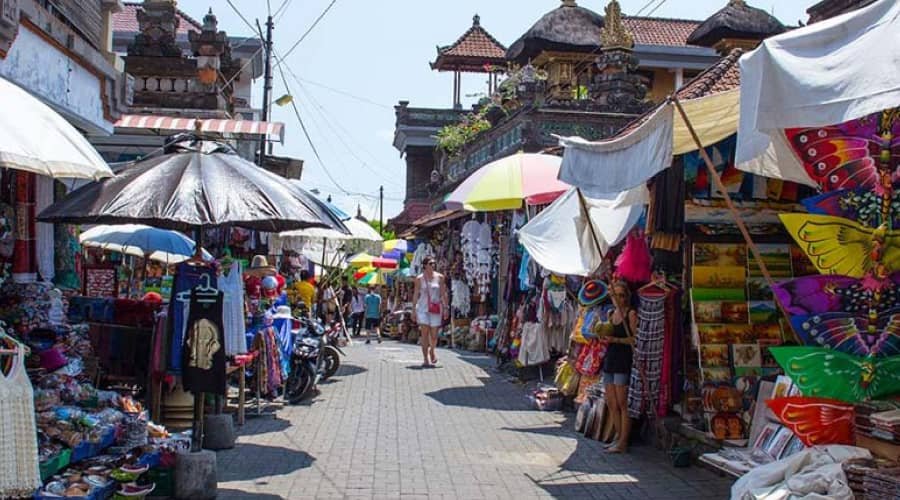 If you are looking for the best places for shopping in Maldives, put Majeedhee Magu on your list. It is the biggest shopping street in the vibrant capital of Maldives, Malé. Needless to say the street usually remains quite busy as both locals and tourists come here to shop. In Majeedhee Magu, you will find stores of perfumes, jewelry, handloom, electronic items, traditional Maldivian clothes, cosmetics, head scarves, and local crafts.
Apart from shopping, you can also find local and tasty treats like dried fish chips, smoked fish, and tuna selling hot and fresh. The market remains open from 9:00 am to 11:00 pm.
Pamper yourself at luxurious overwater villas with glass floors and private plunge pools, feast on freshly-caught seafood curated by renowned chefs, and discover local Maldivian culture through traditional music and dance. Adventurous travelers can swim beside graceful manta rays feeding at cleaning stations, explore coral reefs blooming with brilliant tropical fish, or try surfing the legendary breaks around Male Atoll. And for the ultimate bucket list natural high, jump in the water during whale shark season to snorkel beside the world’s largest fish peacefully filtering plankton. The Maldives rewards visitors with sheer aquatic beauty, exclusive beachfront serenity, and memories to last a lifetime over these sinking sands.
Which is the best place to visit in Maldives for first-timers?
Maafushi is the easiest first base. It is close to Male, well set up for tourists, budget-friendly, and it has beaches, snorkeling trips and dolphin cruises within reach. For a resort, a North Male island with a short speedboat transfer keeps things simple.
What are the top 5 tourist attractions in Maldives?
Hanifaru Bay for manta rays, Vaadhoo Island for the Sea of Stars, the whale sharks of South Ari Atoll, the Grand Friday Mosque in Male, and the local island of Maafushi. Together they cover marine life, culture and easy beach time.
Is Maldives good for a family holiday?
Yes. Islands with shallow lagoons, such as Maafushi and Sun Island, work well for kids, and short speedboat transfers beat long seaplane rides with little ones. Look for guesthouses or resorts with family rooms and a calm swimming beach.
Can you visit Maldives on a budget?
Yes. Stay on local islands like Maafushi, Dhigurah or Fulidhoo, where guesthouse rooms run about USD 50 to 150 (about INR 4,800 to 14,300) a night as of 2026, and use public ferries that cost only a couple of dollars a leg. Group snorkeling trips keep activity costs down too.
Which island has the glowing beach in Maldives?
Vaadhoo Island in Raa Atoll is famous for the Sea of Stars, where bioluminescent plankton light up the shoreline blue at night. It shows best on dark, moonless nights, most often between June and October, but it is never guaranteed.
Do you need a permit to visit places in Maldives?
Most visitors get a free 30-day visa on arrival, and no special permit is needed for local islands. Some protected sites do charge: Hanifaru Bay needs a USD 20 (about INR 1,900) daily permit, and Sultan Park in Male costs about USD 5, near INR 480, for foreign visitors.
The Maldives rewards travelers who plan around their own trip rather than a generic top-ten list. Match the island to your people, the season to your goal, and the transfer to your budget, and the rest tends to fall into place. Ready to map out your own island route? There is plenty more to help you at maldivestourism.org.